
Storm Damage Repair
Storm Damage Repair in Austin, Arkansas
Central Arkansas sits in one of the most severe weather corridors in the country. Hailstorms, high-wind events, and straight-line winds from passing storm systems cause exterior damage to residential and commercial properties across the region multiple times every year. The challenge for most property owners is not recognizing that a storm occurred — it is understanding what the storm actually did to their property, which exterior components were affected, how to document the damage accurately, and how to navigate the insurance claims process that follows.
J. Cole Roofing & Construction provides exterior storm damage repair for properties throughout Austin, AR and Central Arkansas, covering roofing, siding, gutters, and all exterior components affected by storm events. We manage the insurance claims process from initial inspection through final payment, and we do not collect a dollar until every approved scope item is finished and reviewed.
Hail Damage to Your Home's Exterior
Hail is the most common driver of storm damage insurance claims in Arkansas, and it is also the most frequently underestimated. The damage hail causes is not always proportional to what the storm looked like from inside the house. Hailstones as small as three-quarters of an inch can crack vinyl siding panels, dent aluminum gutters, and leave impact bruising on asphalt shingles that compromises their structural integrity without visibly puncturing the surface. Stones at one inch and above cause pervasive damage across entire roof sections, siding elevations, and gutter systems — damage that typically qualifies the property for a full replacement claim under standard Arkansas homeowners and commercial property policies.
What makes hail damage particularly difficult for property owners to assess on their own is that it is almost never fully visible from the ground. Rear and side elevations receive as much storm exposure as the front of the structure but are rarely examined closely without a ladder. The roof itself is completely inaccessible to any meaningful visual inspection from below. Professional on-site documentation by a licensed contractor is the foundation of any credible hail damage claim.
What Hail Does to Roofing
On asphalt shingle roofing, hail impact causes what is commonly called bruising — a compression of the asphalt mat beneath the granule surface that weakens the shingle’s structural integrity at the point of impact. The granules surrounding the impact zone are often displaced, leaving the underlying mat exposed to UV degradation and moisture infiltration. Over time, these impact points become the locations where shingles crack, curl, and eventually fail. A roof that has experienced a significant hail event and has not been inspected is a roof that is aging faster than it would have otherwise and that may already be allowing water infiltration at points invisible from the interior.
What Hail Does to Siding and Gutters
Vinyl and fiber cement siding show hail impact as visible cracks, holes, or indentations in the panel surface — evidence that the weather barrier has been breached and that water can now work behind the siding at those points. Aluminum gutters and downspouts show hail damage as a field of dents across the entire exposed surface, and those dents are among the most reliable physical indicators that a storm produced hailstones large enough to cause damage to other exterior components. Gutter sections that have been structurally deformed by impact also lose their designed slope and drainage capacity, leading to water backup against the fascia and eventual fascia deterioration.
Wind Damage to Roofing and Exteriors
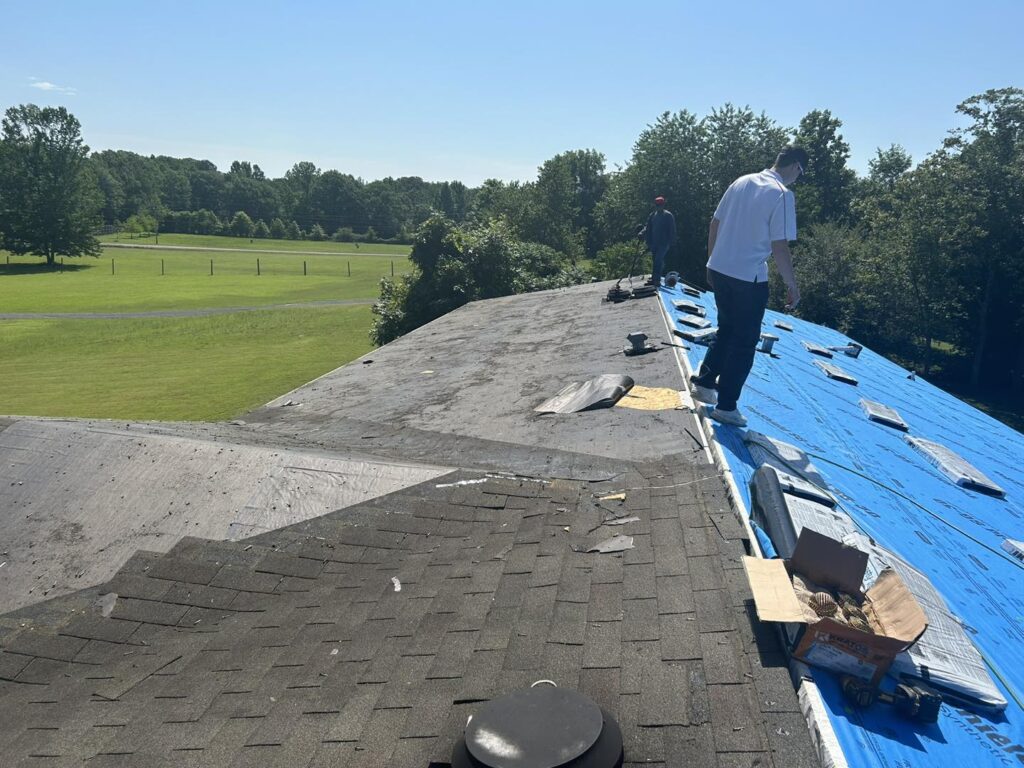
High-wind events cause a different and often more immediately visible category of exterior damage than hail, though the visible component is rarely the complete picture of what the wind accomplished. Wind uplift is most damaging at the edges and corners of rooflines, where shingles are exposed to the greatest lateral force and where fastening patterns are most vulnerable to peel-back failure. A shingle that has been partially lifted by wind and then laid back down may appear intact from the ground but has broken the adhesive seal strip that holds it in place. That shingle is now a point of water infiltration at every rainfall and a candidate for complete blow-off at the next wind event.
Siding and Trim Wind Damage
Wind damage to siding most commonly appears at panel seams and at the corners and perimeter edges of the installation where trim and j-channel provide the fastening structure. High winds pull at these transitions, separating panels from their locking seams and tearing trim away from window and door perimeters. The gaps left behind are direct water infiltration points into the wall assembly. Falling debris driven by high winds — tree branches, displaced roofing material from neighboring structures, and other airborne objects — causes concentrated impact damage that varies from cosmetic to structurally significant depending on what hit the surface and how hard.
Flashing and Penetration Failures from Wind
Wind events frequently displace or separate flashing at roof penetrations and wall transitions — points where the roofing membrane meets chimneys, plumbing vents, skylights, and roof-to-wall intersections. Displaced flashing may not leave an obvious exterior mark, but it opens the roof assembly to water infiltration at those penetration points at every subsequent rainfall. These failures are among the most important findings in a post-storm inspection because they allow water into the structure at locations where the damage can be extensive before it ever becomes visible on an interior ceiling.
The Storm Damage Insurance Claims Process
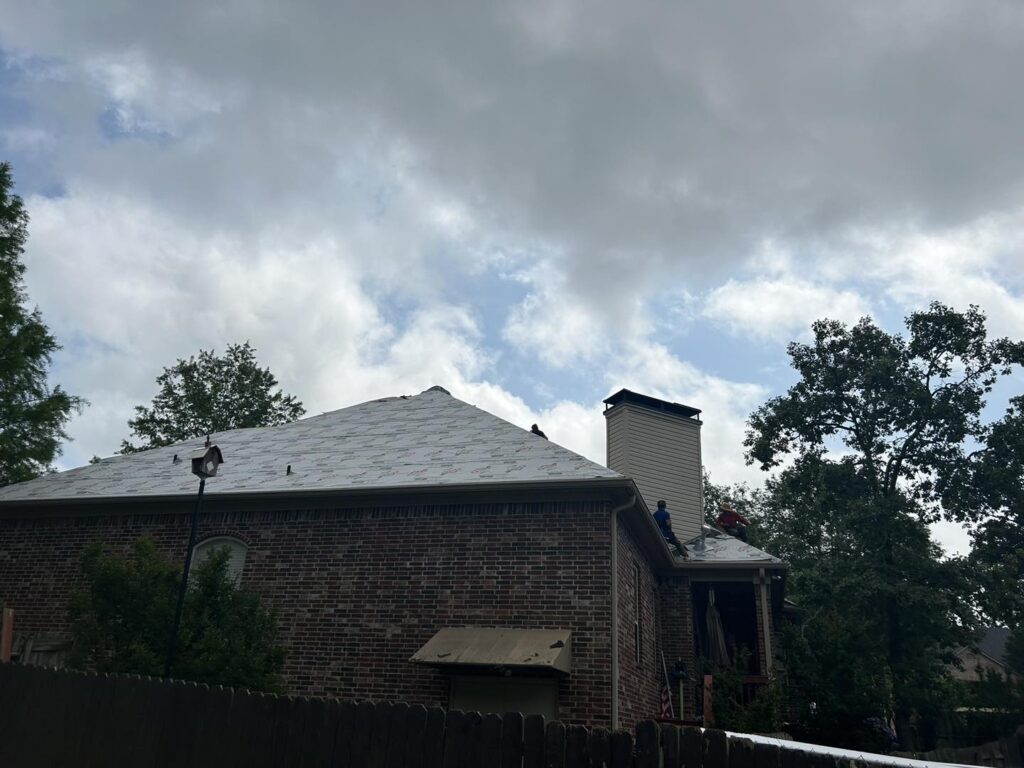
Filing a storm damage insurance claim without contractor involvement is one of the most common ways Arkansas property owners leave money on the table or see legitimate claims denied. The claims process rewards documentation, and documentation requires physical access to every affected surface by someone who knows what storm damage looks like and how to record it in a format that supports a credible claim. J. Cole Roofing & Construction manages the claims process on behalf of property owners from the initial inspection through adjuster coordination, scope review, and final settlement.
When damage is found, we help initiate the claim with the carrier, schedule the adjuster’s site visit, and meet the adjuster at the property to walk every affected exterior surface together. That presence during the adjuster’s inspection matters — it ensures all damage areas receive evaluation, all scope items are discussed in real time, and the approved scope reflects the actual condition of the property rather than what an adjuster observed in a brief solo visit.
Get a Free Storm Damage Inspection in Austin, AR
If your property has been through a recent storm — or if you suspect damage from a storm that passed through weeks or months ago — the right move is a professional inspection before a claim window closes or water infiltration has time to compound the problem. J. Cole Roofing & Construction provides free storm damage inspections for residential and commercial properties throughout Central Arkansas.
We physically inspect every exterior surface, document all findings, and give you an honest assessment of what the storm did and what your options are. We are licensed, locally based in Austin, AR, and we handle the entire process — inspection, documentation, claim filing, adjuster coordination, and completed repairs — so you are not navigating it alone.
Call (501) 605-4426 to schedule your free storm damage inspection or submit a request online. We serve Austin, Cabot, Little Rock, Lonoke, Beebe, Searcy, and surrounding communities throughout Central Arkansas. No cost to inspect, no obligation to proceed, and no payment collected until the work is finished and reviewed.