Get A Free Quote
Expert Attic Ventilation Installation in Austin, Arkansas
A roof can only perform as well as the airflow moving beneath it. When attic ventilation is undersized or the intake and exhaust are out of balance, heat and moisture collect above your ceiling and quietly wear down everything near them — shingles overheat from the underside, roof decking warps, insulation stops insulating, and utility bills creep upward. J. Cole Roofing and Construction designs and installs attic ventilation systems that keep air circulating the way it should, safeguarding both the roof structure and the comfort of the rooms below.
We provide attic ventilation installation for homeowners and commercial property owners throughout Austin, AR, Cabot, Little Rock, and the broader Central Arkansas area. Whatever the size or style of your building, our approach is consistent: a thorough on-site evaluation, an honest recommendation, a scope of work spelled out in writing, and payment collected only after the installation is finished and inspected.
Attic Ventilation Assessments
Ventilation trouble seldom announces itself plainly. It surfaces gradually — trapped summer heat that pushes cooling costs higher, winter condensation that drips down onto insulation and framing, early shingle curling from excessive attic temperatures, and musty smells that point to moisture with no way out. By the time those signs appear inside the house, the attic has usually been fighting to breathe for quite a while.
A proper attic ventilation assessment is one of the wisest moves a property owner can make. Fixing an intake-and-exhaust imbalance before it ruins decking and insulation costs a small fraction of replacing those materials once moisture has taken its toll. The evaluation isn’t an expense to skip — it’s the step that stops a minor adjustment from becoming a major repair.
What Our Ventilation Assessments Include
Every attic ventilation project at J. Cole Roofing and Construction opens with a hands-on, on-site inspection of your attic and roofline. We never estimate airflow from the ground or from aerial pictures. We inspect the existing intake and exhaust parts — soffit vents, ridge vents, gable vents, and any powered fans — compare the attic square footage against the recommended net free area, review insulation placement, and search for the classic signs of trapped heat and moisture. You receive a written summary with photos showing exactly what we discovered.
That written report does far more than direct the ventilation work. It gives property owners a dependable record for insurance questions, energy-efficiency planning, and real estate deals where buyers or lenders ask about the shape of the roof and attic. Documented maintenance is simply responsible care of the building.
Ventilation System Design and Installation
An attic ventilation system only performs when intake and exhaust are correctly balanced — too much of one or too little of the other and the entire system falls short. Adding extra exhaust vents without matching intake, for instance, can pull conditioned air out of the home instead of venting the attic. J. Cole Roofing and Construction handles every installation honestly. If simply adding soffit vents fixes the airflow problem, that’s exactly what we recommend. If the attic needs a complete redesign to breathe properly, we explain precisely why and support it with the findings from our inspection.
How We Install Attic Ventilation
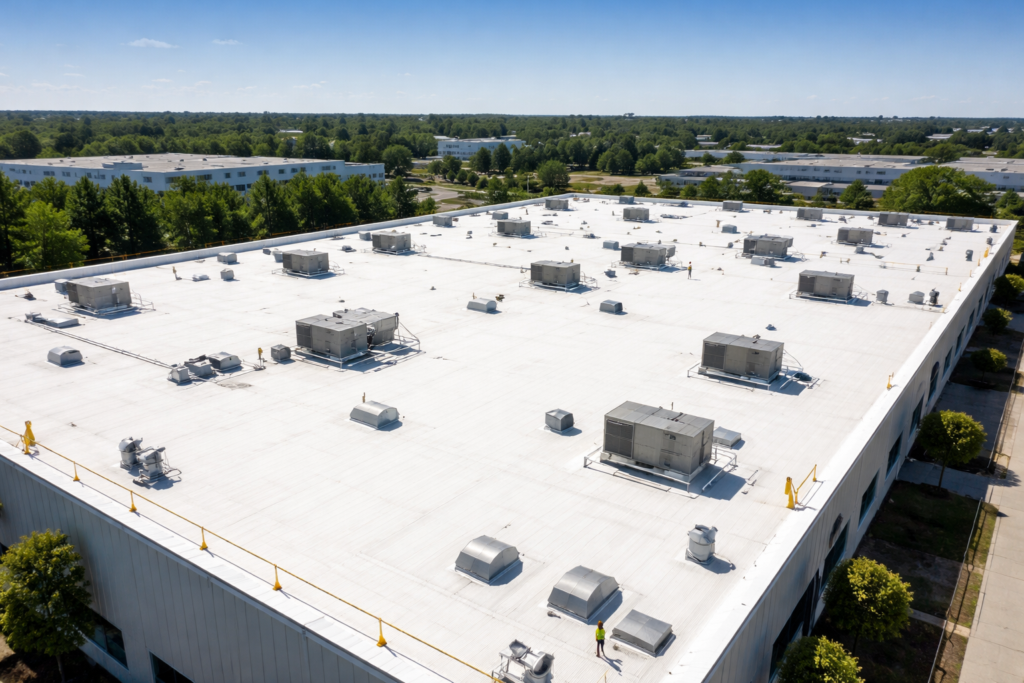
A well-engineered attic ventilation system involves far more than screwing on a handful of vents. It demands a coordinated plan that accounts for roof geometry, attic volume, insulation placement, and the balance between intake at the soffits and exhaust at the ridge. J. Cole Roofing and Construction confirms the layout, product choices, and installation timeline before any work starts, so the plan you approve is precisely what gets installed — no surprises along the way.
We install ridge vents, soffit and intake vents, gable vents, and powered attic ventilators as the design requires, matching each component to your roof and climate so air moves continuously from the eaves up and out the peak. Every material selection and line item in the scope is confirmed in writing before installation begins, and the work is finished to deliver the performance the system was designed to provide.
Ventilation and Storm Damage Recovery
High winds and hail do more than batter shingles — they rip loose ridge vents, crush soffit vents, and knock gable louvers out of line, interrupting the airflow a roof relies on. After a powerful storm in Central Arkansas, ventilation components are easy to miss while attention turns to the obvious leaks and dents. Yet a damaged vent lets wind-driven rain into the attic and leaves heat and moisture trapped right where they cause the most harm. Spotting that damage early is what keeps a single storm from becoming a long-term moisture problem.
Insurance Claims and Adjuster Coordination
J. Cole Roofing and Construction inspects storm-damaged attic ventilation with the same physical thoroughness we apply to every roof we evaluate. We get up on the roof, examine the intake and exhaust components along with the surrounding roofing, document damaged vents and related findings with photographs and written notes, and help property owners file claims with their carriers. We meet the insurance adjuster on-site during their inspection so that damaged ventilation and roofing are accurately assessed and the approved scope reflects the roof’s true condition — not a rushed review done without a contractor present.
If a claim is denied even though the damage appears to satisfy the terms of the policy, we help the property owner review the decision and weigh whether an appeal is worthwhile. Accuracy leads us through every stage of the claims process. Both the owner and the insurer benefit when a contractor documents damage honestly and advocates for a scope that matches what genuinely happened to the roof.
Why Working With a Licensed Contractor Matters
Attic ventilation affects both the roofing system and the structure beneath it, which is exactly why the work belongs to a licensed, credentialed contractor rather than whoever quotes the lowest price. A poorly designed or badly installed system can cause more harm than leaving things unchanged — drawing moisture into the attic, voiding shingle warranties, or raising energy costs. J. Cole Roofing and Construction works under Arkansas Commercial Roofing License #0357350926, and every attic ventilation project we complete meets professional construction standards that protect your home and your investment.
Request an Attic Ventilation Estimate in Austin, AR
Homeowners and property managers across Central Arkansas deserve a contractor who shows up, documents accurately, keeps to the schedule, and stands behind the completed work. J. Cole Roofing and Construction is licensed under Arkansas Commercial Roofing License #0357350926 and brings the same transparency to an attic ventilation installation that we bring to every job we accept — a clear scope, confirmed in writing, with payment collected only after the work is reviewed and complete.
Whether you want a ventilation assessment to learn how your attic is breathing, a full system design and installation to correct an airflow problem, or storm damage documentation and insurance support after severe weather, we’re ready to help. Call (501) 605-4426) to schedule an on-site evaluation or request a quote online. We respond quickly and will arrange a visit to your property whenever it suits you best.
We install and service attic ventilation throughout Austin, Cabot, Little Rock, Lonoke, Beebe, Searcy, and the surrounding Central Arkansas region. If your attic isn’t breathing the way it should, the ideal time to correct it is before trapped heat and moisture grow into a larger, costlier problem.